Last updated 16 July 2026
Workplace EV charging has become something employees actively look for when choosing an employer. With more Australians driving electric vehicles, businesses that offer charging infrastructure have a genuine edge over those that don’t.
This page covers what Australian businesses need to know about commercial EV charger installation: the types of chargers, what to consider before buying, and what financial support is available.
Who Needs Commercial EV Chargers?
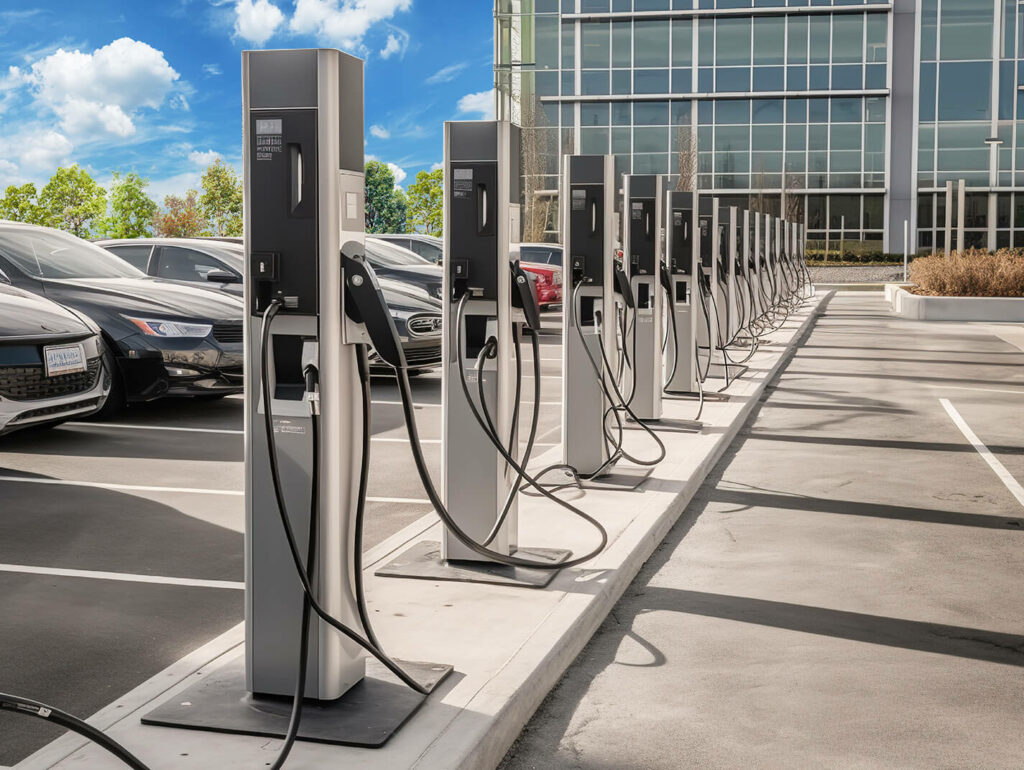
Commercial chargers suit a wide range of settings. Workplaces and office buildings offer charging as an employee benefit, particularly valuable given the FBT exemption makes novated lease EVs very attractive to staff. Retail and hospitality venues use chargers to increase dwell time and attract EV-owning customers. Fleet operators install on-site chargers to manage charging schedules and reduce reliance on public infrastructure. Car parks and strata buildings add chargers as a revenue stream or tenant amenity.
EV ownership among Australian drivers is growing fast, and the infrastructure to support it needs to keep pace.
Solar Market connects Australian businesses with qualified commercial EV charger suppliers. Get 2 free quotes today.
Charger Types for Commercial Use
For a full explanation of Level 1, Level 2, and Level 3 DC fast chargers, visit our Electric Vehicle Chargers page. For commercial settings, the choice generally comes down to two options:
Level 2 AC Chargers
The standard for workplace and destination charging. They deliver 40–130km of range per hour, enough for most employees to get a meaningful top-up during a standard workday. Hardware costs typically run $1,500–$4,000 per unit, making them the practical starting point for most businesses.
Level 3 DC Fast Chargers
Best suited to high-traffic locations where vehicles park for short periods. Service stations, highway stops, and retail car parks with fast turnover are typical use cases. They can charge most EVs to 80% in 20–30 minutes but cost more to purchase and install. Units under $20,000 may qualify for the instant asset write-off.
What to Consider Before Installing
Location and Traffic Patterns
A Level 2 charger at a workplace where cars park for 6–8 hours makes sense. The same charger at a café with 30-minute average stays does not. Match the charger type to how long vehicles typically park at your site.
Number of Chargers
Start with demand you can see, not what you expect. It’s easier to add chargers once utilisation is established than to over-invest upfront. A qualified supplier can advise on future-proofing your electrical infrastructure so adding units later is straightforward.
Network Software
Any commercial charger setup needs OCPP-compliant software to handle billing, access control, usage tracking, and remote monitoring. This is not optional. It’s how you manage the chargers, generate revenue, and report on usage.
Electrical Capacity
Older buildings often need switchboard upgrades before commercial chargers can be installed. Factor this into your budget from the start.
Financial Incentives for Businesses
Several programs are currently available to reduce the upfront cost of commercial EV charger installation:
The federal DRIVEN Charger Rebate Scheme provides up to $2,500 per eligible smart EV charger and up to $20,000 per site for licensed motor dealers, service centres, and automotive repair businesses. The current round is closed but is expected to reopen in the 2026-27 financial year.
The NSW EV Fleets Incentive has two funding streams. Kick-start funding is open until 30 November 2026 with a total allocation of $9 million, suitable for smaller fleets or businesses piloting a few EVs. The competitive bid round is currently closed with the next round planned for later in 2026.
Level 2 commercial chargers costing under $20,000 (excluding GST) may qualify for the instant asset write-off for small businesses with aggregated turnover under $10 million. DC fast chargers above the threshold enter the depreciation pool. Confirm eligibility with your accountant.
State-based incentives vary and change regularly. Visit our Australian EV Charger Rebates and Grants page for the current state-by-state picture.
Supporting Your Employees
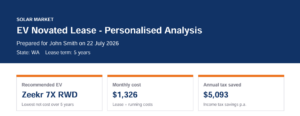
Installing workplace chargers works well alongside supporting staff who are considering an EV through salary packaging. The federal FBT exemption makes novated lease EVs more affordable, with employees saving thousands per year through pre-tax salary sacrifice. Point your team to our Electric Car FBT Exemption guide or our EV Novated Lease Calculator to see what they could save.
Get Quotes for Your Business
Solar Market connects businesses with qualified, experienced commercial EV charger suppliers across Australia. Tell us what you need and we’ll get you 2 free quotes to compare.



 Step 3