So you’ve heard solar can save you big bucks and it’s a great investment, but what is the typical Solar System Payback Period and how long until you’ve pocketed enough savings to have covered the costs of buying your Solar System?
For many households, a well-sized solar system pays for itself within a few years. How quickly depends on your energy use, location, electricity rates and feed-in tariff. States with extra incentives can be quicker.
Factors that could affect your ROI
Location and panel direction
The more sun your solar panels receive means the more energy they will generate. If your home is located where daylight hours or sunny days are plentiful then your ROI will be faster than someone whose household is not.
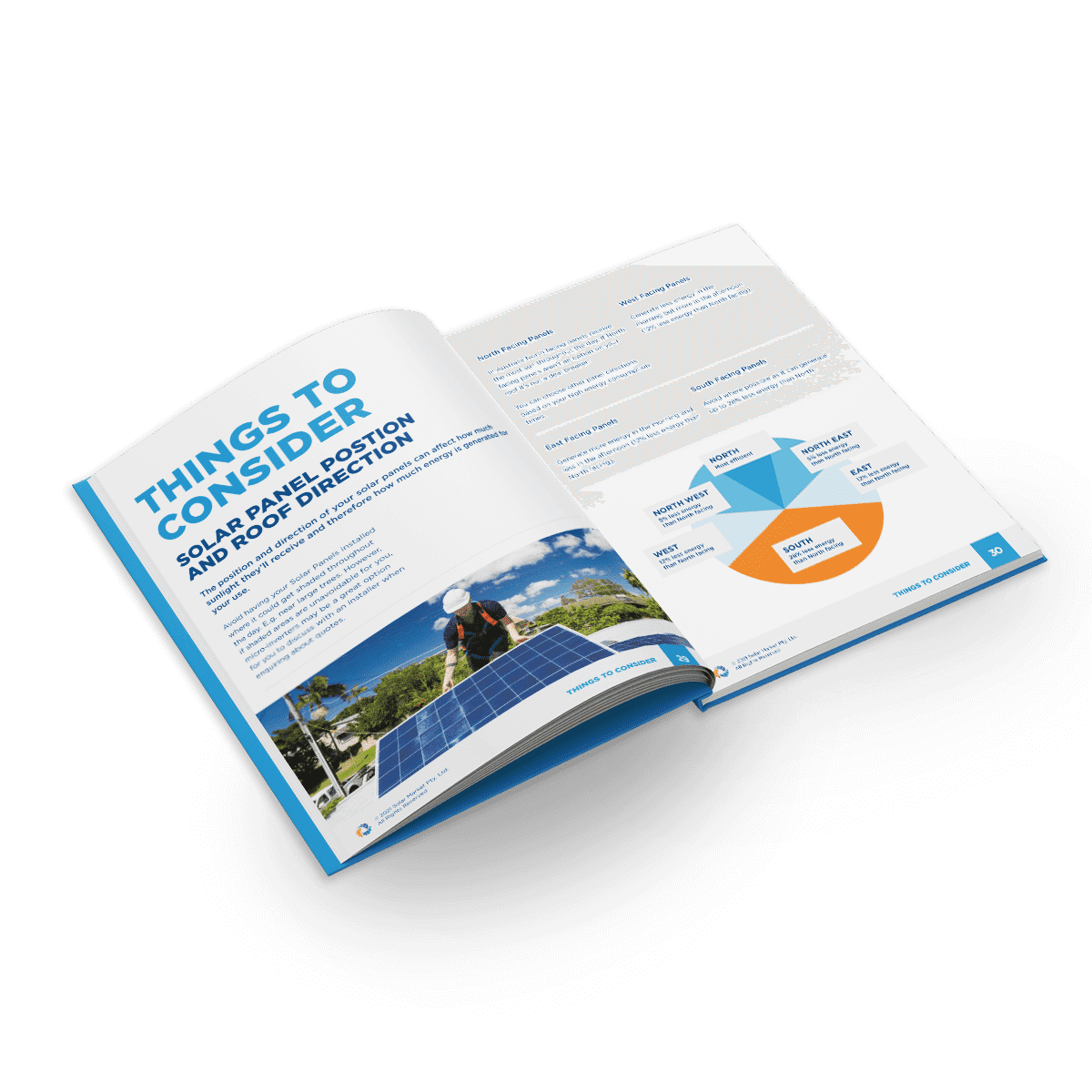
Solar panel positioning and roof direction
The position and direction of your solar panels can affect how much sunlight they’ll receive and therefore how much energy is generated for your use. First off, avoid having your Solar Panels installed where they could get shaded throughout the day. E.g. near large trees.
Find out the ideal orientation for your panels here
Changes to Government subsidies
The federal Small-scale Renewable Energy Scheme (SRES) gives you an upfront discount on your solar system through STCs. The discount gets smaller every January until the scheme ends in 2030, so the earlier you install, the bigger the discount and the faster your payback.
For example, a 6.6 kW system in zone 3 (which covers most capital cities) gets about 36 STCs, worth about $1,404, if it’s installed in 2027, compared with 45 STCs in 2026.
If your state offers its own rebate or incentive on top of the federal discount, your payback will be faster again.
Your energy habits
To maximise your potential solar savings those installing solar power systems will need to adjust their energy habits and shift the majority of their energy usage to during daylight hours, whilst the solar panels are generating energy. Find some handy tips to help you adjust your habits here.
Finance
If you’re paying for the Solar PV System on finance, the interest of this finance could increase the ROI timeframe. You’ll want to work out how much extra time this is going to add, to ensure finance is the best option.
Important: Make sure your installer is SAA-accredited and your panels and inverter are on the Clean Energy Council’s approved products list. If not, you won’t receive STCs.
Work out your predicted ROI
Check out our Solar Savings Calculator! It’ll help you determine the estimated payback period and financial returns from investing in solar, plus it will also estimate what your bills will be after installing your system.


 Step 3