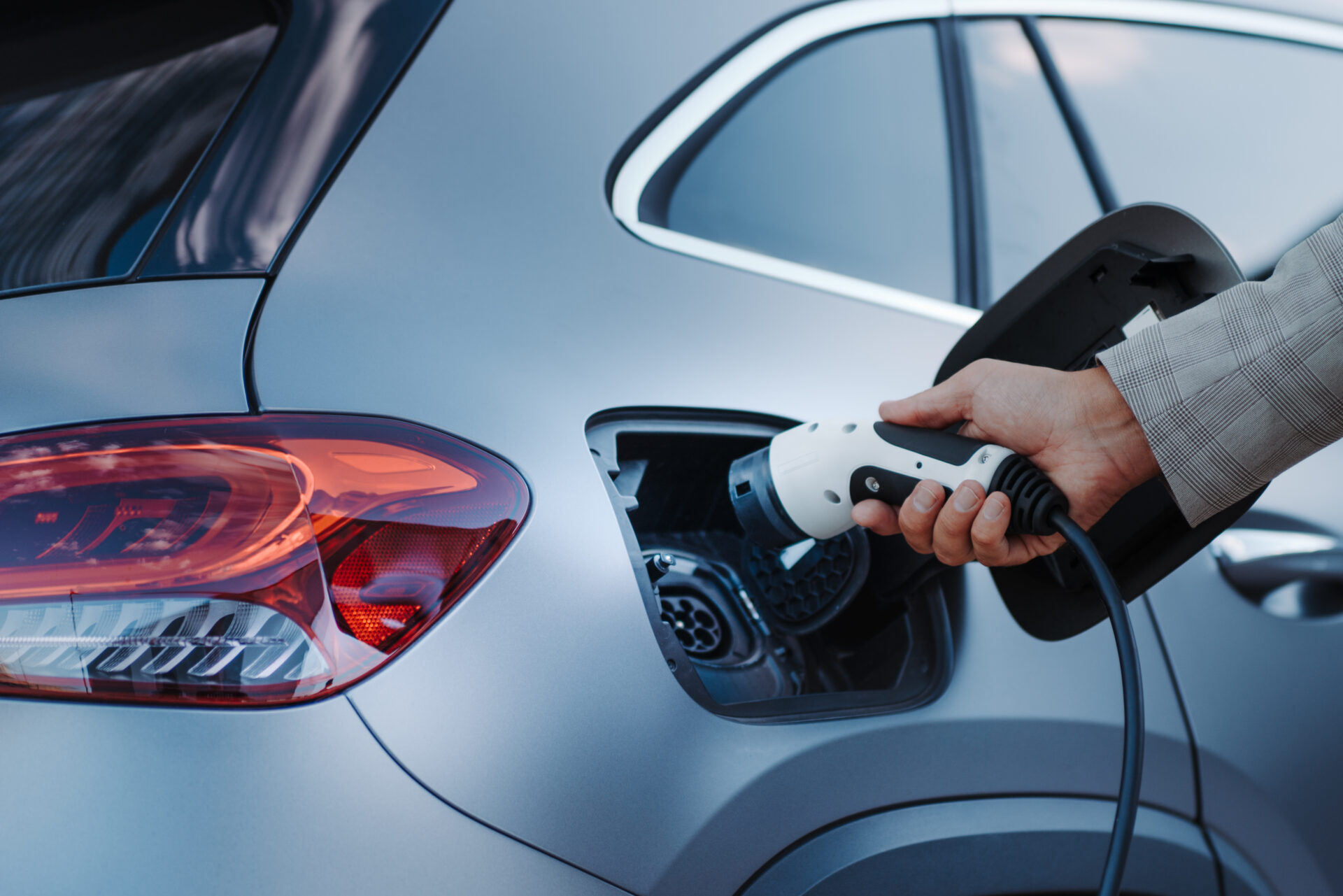
Australia’s EV Fringe Benefits Tax (FBT) exemption has saved buyers thousands of dollars since 2022. But the rules are about to tighten, and not every electric car on the market still gets the full benefit.
Here’s exactly which vehicles qualify, what changes from 1 April 2027, and what to look out for if you’re shopping right now.
The basic rule
To get the full FBT exemption, an eligible EV must sit below the Luxury Car Tax threshold for fuel-efficient vehicles. For the 2026-27 financial year, that threshold is $91,661, up from $91,387 the year before. It must also be a Battery Electric Vehicle or Hydrogen Fuel Cell Electric Vehicle, and first held or used on or after 1 July 2022. Plug-in hybrids no longer qualify at all, having lost eligibility from 1 April 2025.
Within that $91,661 ceiling sits the vast majority of EVs sold in Australia. Here’s a practical breakdown by category.
Vehicle prices below were correct at the time of writing and may change. Always check the current drive-away price before assuming eligibility..
Budget EVs — comfortably under the threshold
These are the cheapest way into a qualifying EV, and they’re not far off the price of a well-specced petrol hatchback once the FBT exemption is factored in.
The BYD Atto 1 starts from $23,990 plus on-road costs, the lowest price ever seen for a new electric car in Australia. The BYD Dolphin sits from $29,990 before on-road costs. The new MG S6 EV starts at $49,990 drive-away, and the MG4 EV Urban is priced from $31,990 drive-away.
All of these sit well clear of the threshold, meaning there’s no question mark over their eligibility at any point in the current three-phase wind-back.
Mid-range EVs — the most popular segment
This is where most novated lease buyers land. The Tesla Model Y starts from $64,373 drive-away and remains Australia’s best-selling EV. The Tesla Model 3 is priced from $60,315 drive-away. The BYD Sealion 7 starts from $58,697.52 drive-away, and the Kia EV5 from $56,770 drive-away.
These vehicles all sit comfortably under the $75,000 threshold that kicks in from 1 April 2027, meaning even after the phase-down begins, buyers in this segment keep the full exemption. That’s worth knowing if you’re choosing between a mid-range EV now versus waiting.
Higher-spec EVs — eligible now, worth checking later
This is the segment to pay closer attention to. The base BMW iX3 M Sport is priced at $89,100 before on-road costs, narrowly sitting under the current threshold. The BMW i4 eDrive35 comes in at $85,900 before on-roads, and both BMW iX2 variants sit between $82,900 and $85,700 before on-road costs.
Vehicles in this $75,000–$91,661 bracket currently get the full exemption. From 1 April 2027, that changes. They’ll move to a 25% FBT discount instead of a full exemption. Still a worthwhile saving, but a step down from what’s available right now.
If you’re looking at something in this price range, locking in a novated lease before 31 March 2027 secures the full exemption for the entire term of your lease.
What no longer qualifies
A few categories are now firmly out of scope.
Plug-in hybrids, regardless of price, lost eligibility from 1 April 2025. That includes popular models like the Mitsubishi Outlander PHEV and Toyota RAV4 PHEV. Standard hybrids without a plug, such as the Toyota RAV4 Hybrid, never qualified in the first place since they’re not zero or low-emission vehicles under FBT law.
Vehicles priced above the LCT threshold are also excluded entirely, no matter how efficient they are. That rules out higher-end EVs like the Tesla Model S, the base Porsche Taycan, and most BMW iX variants outside the entry trim.
The import tariff angle
Worth knowing if you’re cross-shopping brands. The removal of the 5% import tariff on EVs without a Free Trade Agreement with Australia has helped keep prices down on brands like BYD and MG specifically, which is part of why so many budget and mid-range options exist below the threshold in the first place. It’s a separate incentive to the FBT exemption, but the two work together to make EVs from these brands particularly competitive.
Used EVs
The exemption isn’t limited to new cars. A second-hand EV can qualify provided it was first purchased new on or after 1 July 2022 and has never attracted Luxury Car Tax on a previous sale. If you’re looking at a used EV through a novated lease, check with the seller whether LCT was ever payable on it. If it was, the exemption doesn’t apply even if the current price is well under the threshold.
What to do next
If you’re shopping for an EV through salary packaging, the most important number to check isn’t the asking price. It’s the GST-inclusive drive-away price at the time of first retail sale. That’s the figure assessed against the LCT threshold, and dealer add-ons can sometimes push a borderline vehicle over the line.
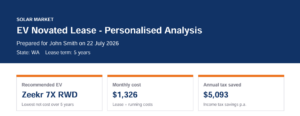
For the full picture on how the FBT exemption works, including the three-phase changes from 2027, read our Electric Car FBT Exemption Explained guide. And to see exactly what you’d save on a specific vehicle and salary, try our EV Novated Lease Calculator.
For a full breakdown of all current EV incentives including state-based rebates and the import tariff waiver, visit our Australian EV Charger Rebates and Grants page.
This article is general information only and does not constitute financial or tax advice. Vehicle prices are subject to change and may vary by state, dealer and specification. Before making any decisions about salary packaging, novated leasing or EV purchases, consult the ATO or a registered tax agent.
Battery Electric Vehicles (BEVs) and Hydrogen Fuel Cell Electric Vehicles (FCEVs) with a GST-inclusive value under the LCT threshold for fuel-efficient vehicles ($91,661 for 2026-27) qualify. Popular models include the Tesla Model Y, Tesla Model 3, BYD Atto 3, BYD Dolphin, MG4, and Kia EV5.
No. Plug-in hybrid vehicles lost eligibility from 1 April 2025 and are no longer covered under any new arrangement.
The Luxury Car Tax threshold for fuel-efficient vehicles, including most EVs, is $91,661 for the 2026-27 financial year. EVs must be priced below this figure at the time of first retail sale to qualify for the FBT exemption.
From 1 April 2027, the full FBT exemption continues only for EVs priced under $75,000. EVs between $75,000 and $91,661 receive a 25% FBT discount instead. From 1 April 2029, the 25% discount applies to all eligible EVs.
Yes, provided the vehicle was first purchased new on or after 1 July 2022 and has never had Luxury Car Tax applied on a previous sale.