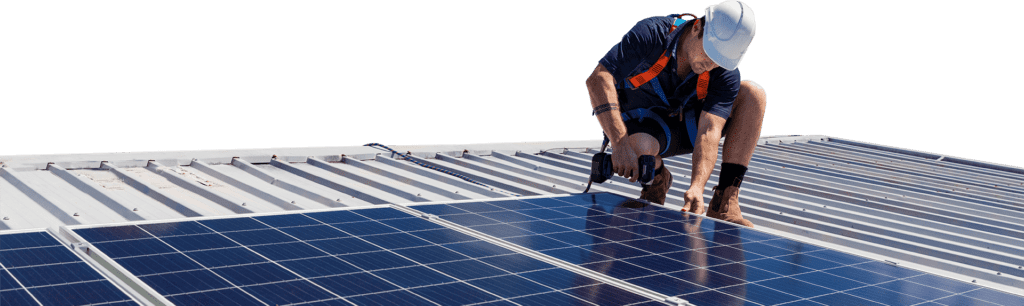

Most of the conversation around solar rebates in Australia has been about homes, where roughly one in three already have panels. On 4 August, ahead of his National Press Club address, Energy Minister Chris Bowen announced a change aimed squarely at businesses: the Small-scale Renewable Energy Scheme (SRES), the mechanism that makes upfront solar discounts possible, is being expanded to cover systems up to 1 megawatt, up from the current 100 kilowatt cap.
If you run a warehouse, a factory floor, a cold store, or a mid-sized farm shed, this is the announcement that’s actually about you.
Why the 100kW cap mattered
Under the current rules, only small systems qualify for the SRES’s upfront certificate discount. Anything bigger has to go through the Large-scale Renewable Energy Target instead, which works very differently and offers nowhere near the same immediate cost reduction. That gap sat right where a lot of commercial rooftops live. A 150kW or 300kW system on a business roof was too big for the small scheme and too small to make the large scheme worthwhile, so plenty of businesses just didn’t bother.
The numbers show why. Businesses across the country have installed only 5.6 gigawatts of rooftop solar, compared with 22 gigawatts on homes, despite having, by some industry estimates, over 80 gigawatts of potential solar capacity sitting idle. “The technical rooftop potential for solar on commercial, industrial and agricultural rooftops could exceed 80 gigawatts,” Bowen said. “That’s an opportunity we should miss no longer.”
“Larger energy users have been locked out because the existing solar rebate only supports systems up to 100 kilowatts,” Bowen said.
What actually changes, and when
From 1 October 2026, subject to the usual regulatory sign-off, systems up to 1MW will qualify for SRES certificates. The government’s figures suggest this brings installation costs down by roughly 20 percent across the board. For a 250kW system, that works out to around $68,000 off the upfront cost, on top of an estimated $50,000 a year in energy bill savings once it’s running. Scale that up to an 850kW system and you’re looking at something closer to $230,000 off the install, with annual savings estimated around $175,000.
There’s a second, quieter part of the announcement worth flagging. Bowen has asked the Australian Energy Market Commission to review the rules that currently let distribution networks sit on commercial connection approvals for months. If that review leads to changes, the actual bottleneck for a lot of these projects (waiting on the network operator, not waiting on finance or hardware) could finally start moving faster too.
Where this leaves homeowners
None of this changes the residential rebate itself, so standard home system pricing stays the same for now. The Cheaper Home Batteries Program is still running for households wanting to pair panels with storage. But if you’re a homeowner who also runs a business, or you know someone who does, this is worth passing on. For a lot of commercial and industrial energy users, the finance on solar has simply never stacked up, and this is the first real structural change to that in years.
What we'd suggest doing next
If you own or manage a commercial site with 150kW to 1MW of realistic rooftop capacity, it’s worth getting a proper site assessment done now rather than waiting for October. Network approval timelines, even with a faster process, tend to queue up once a scheme like this goes live, and getting your paperwork moving early means you’re not stuck behind everyone else who read the same headline.
Every roof, meter, and load profile is different, so the only way to know your actual numbers is a proper quote. Head to Solar Commercial Market and get proposals lined up before the rush starts.
This article is based on Minister Bowen’s 4 August 2026 announcement. Final details are subject to the SRES amendment passing the usual regulatory process, and we’ll update this post once the rules are locked in.